
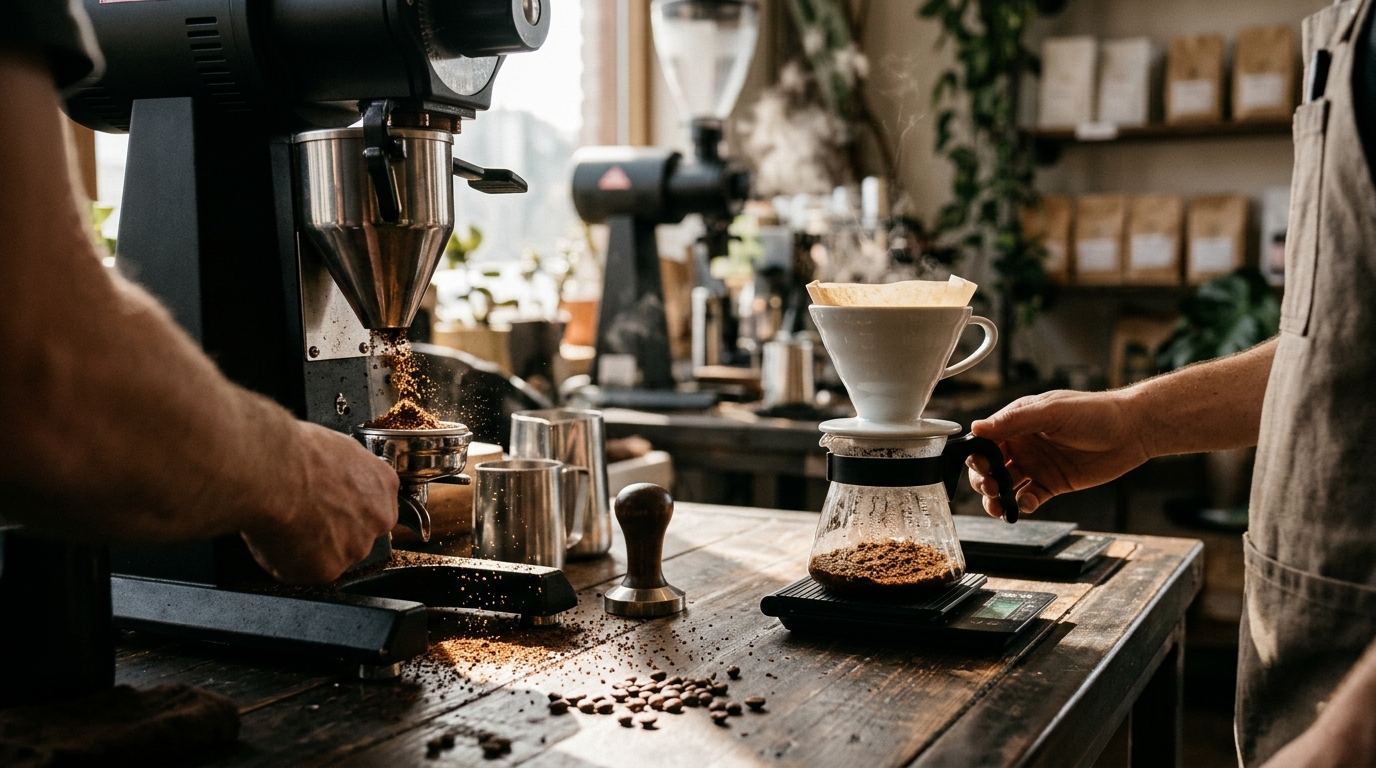
Grind freshness is the primary driver of flavor stability in both espresso and pour over coffee. Once beans are ground, oxidation begins immediately, causing volatile aromatics to dissipate and resulting in a flat, stale cup. For optimal taste, coffee should be ground immediately before brewing. At Harlo Coffee Roasters, we emphasize that the first cup is everything, which is why we offer fresh grinding services to ensure you capture the full spectrum of flavor in your home brew.
The Science of Oxidation in Ground Coffee
Grind freshness is defined by the time elapsed between the bean being ground and the water contacting the grounds. This metric is critical because grinding increases the surface area of the coffee exponentially. Whole beans protect their internal oils and aromatics, but ground coffee exposes these compounds to oxygen. This exposure triggers oxidation, a chemical reaction that degrades flavor compounds rapidly. Within minutes of grinding, the most delicate and desirable aromatics begin to fade. This process is irreversible and cannot be stopped by storage methods alone.
The impact is most severe in the first hour after grinding. Studies in food science indicate that a significant portion of volatile compounds is lost within the first few minutes. For home brewers, this means that pre-ground coffee stored in a jar for even a short period will taste noticeably different from coffee ground seconds before brewing. The difference is not subtle; it is the difference between a vibrant, complex cup and a dull, papery one. Understanding this chemical reality is the first step toward better home brewing.
Espresso: High Pressure and Freshness Sensitivity
Espresso is a high-pressure brewing method that extracts coffee quickly, typically in 25 to 30 seconds. This method is highly sensitive to grind freshness because it forces water through a dense puck of coffee. When coffee is stale, the oils that create crema and body have oxidized. This leads to a shot that lacks sweetness and exhibits harsh, bitter notes. The pressure of espresso extraction amplifies these negative characteristics. A fresh grind produces a shot with a stable crema and a balanced flavor profile. A stale grind produces a shot that is thin, sour, or aggressively bitter.
At Harlo Coffee Roasters, our brew guides highlight that espresso requires a fine grind, which accelerates the oxidation process. The fine particles have a massive surface area, making them vulnerable to air. If you grind your espresso beans the night before, you are likely to experience under-extraction or a flat taste. The implication for home espresso users is clear: grind immediately before pulling the shot. This single habit transforms the quality of your morning ritual. It ensures that the pressure extraction captures the full aromatic potential of the bean.
Pour Over: Clarity and Aromatic Volatility
Pour over brewing is a gravity-fed method that emphasizes clarity and delicate flavor notes. This method is equally sensitive to grind freshness, but for different reasons. Pour over extracts coffee slowly, allowing subtle aromatics to shine. When coffee is stale, these subtle notes vanish first. The result is a cup that tastes watered down or lacking in complexity. Freshly ground coffee in a pour over reveals distinct layers of flavor, from citrus to floral to chocolate. Stale coffee masks these layers with a flat, one-dimensional taste. The clarity of the pour over method makes the absence of freshness more apparent than in other brewing styles.
The grind size for pour over is typically medium to medium-fine. This size offers a balance between extraction speed and surface area. However, even at this size, oxidation proceeds quickly. A common mistake is grinding coffee for a pour over and then waiting to brew. This wait time, even if only ten minutes, can significantly reduce the cup's vibrancy. The implication is that the ritual of brewing should include the grinding step as the final action. By grinding immediately before pouring, you ensure that the water extracts the maximum amount of fresh aromatics. This approach aligns with the philosophy at Harlo Coffee Roasters, where precision and care define the coffee experience.
Practical Strategies for Home Brewers
Implementing grind freshness strategies requires minimal effort but yields significant results. The most effective strategy is to grind only the amount of coffee needed for a single brew. This eliminates the problem of storing grounds. If you brew multiple cups, grind all the grounds immediately before brewing. Avoid grinding in advance, even if you plan to brew within an hour. The oxidation process is too fast to allow for pre-grinding. This discipline ensures that every cup benefits from the peak freshness of the bean.
Another strategy is to use a high-quality grinder. A consistent grind size ensures even extraction, which complements freshness. Inconsistent grinds can lead to channeling in espresso or uneven extraction in pour over. At Harlo Coffee Roasters, we provide a detailed grind size guide to help you match your grinder settings to your brew method. If you do not own a grinder, we offer fresh grinding services. We can grind your coffee to the exact size you need, ensuring that you receive a product that is ready for immediate brewing. This service bridges the gap between roasting and brewing, preserving the integrity of the coffee.
Key Takeaways
- Grind freshness is the time between grinding and brewing, and it directly impacts flavor quality.
- Oxidation begins immediately after grinding, causing volatile aromatics to dissipate within minutes.
- Espresso is highly sensitive to freshness due to high-pressure extraction, which amplifies stale notes.
- Pour over brewing emphasizes clarity, making the loss of subtle aromatics in stale coffee more apparent.
- The best practice is to grind coffee immediately before brewing, using only the amount needed.
- Using a consistent grind size complements freshness by ensuring even extraction.
- Harlo Coffee Roasters offers fresh grinding services to ensure peak flavor for home brewers.
Frequently Asked Questions
How long does ground coffee stay fresh?
Ground coffee begins to lose its volatile aromatics immediately after grinding. While it may still be drinkable for several hours, the peak flavor is lost within the first 15 to 30 minutes. For the best taste, grind coffee immediately before brewing. Storing ground coffee for more than a few minutes significantly reduces its quality.
Does grind size affect how quickly coffee goes stale?
Yes, grind size directly affects the rate of oxidation. Finer grinds have a larger surface area, which exposes more coffee to oxygen. This means that espresso grinds go stale faster than coarse French press grinds. However, even coarse grinds lose flavor rapidly compared to whole beans. The key is to grind immediately before brewing, regardless of size.
Can I store ground coffee in an airtight container?
An airtight container can slow oxidation by limiting air exposure, but it cannot stop it. The coffee is already exposed to oxygen during the grinding process. Storing grounds in an airtight container is better than leaving them open, but it is not a substitute for grinding fresh. For the best results, avoid storing grounds altogether. Grind only what you need, and brew immediately.
Why does my espresso taste bitter when I use pre-ground coffee?
Bitterness in espresso from pre-ground coffee is often a sign of oxidation and over-extraction of stale compounds. As coffee goes stale, the desirable sugars and aromatics fade, leaving behind harsher, bitter notes. The high pressure of espresso extraction pulls these bitter compounds more aggressively. Grinding fresh beans immediately before brewing resolves this issue by ensuring that the extraction captures fresh, balanced flavors.
Do I need a special grinder for pour over coffee?
You do not need a special grinder, but you do need a grinder that produces a consistent medium to medium-fine grind. Consistency is key for even extraction in pour over brewing. A burr grinder is recommended over a blade grinder because it provides a more uniform particle size. At Harlo Coffee Roasters, we provide guidance on grind sizes to help you achieve the right consistency for your brew method.
How does Harlo Coffee Roasters ensure freshness?
Harlo Coffee Roasters roasts coffee in small batches and ships it fresh from Los Angeles. We also offer a fresh grinding service where we grind your coffee to your preferred size before shipping. This ensures that the coffee is as fresh as possible when it arrives at your door. Our commitment to quality means that every bag is roasted with precision and care, honoring the belief that the first cup is everything.
Conclusion
Grind freshness is the single most important factor in determining the flavor of your home-brewed coffee. Whether you are pulling a shot of espresso or brewing a pour over, the time between grinding and brewing matters. Oxidation is a rapid process that degrades flavor compounds, leading to a stale and flat cup. By adopting the habit of grinding immediately before brewing, you can unlock the full potential of your coffee. At Harlo Coffee Roasters, we are committed to helping you achieve this standard. Explore our specialty coffee collection and discover the difference that fresh, precise grinding makes in your daily ritual.