

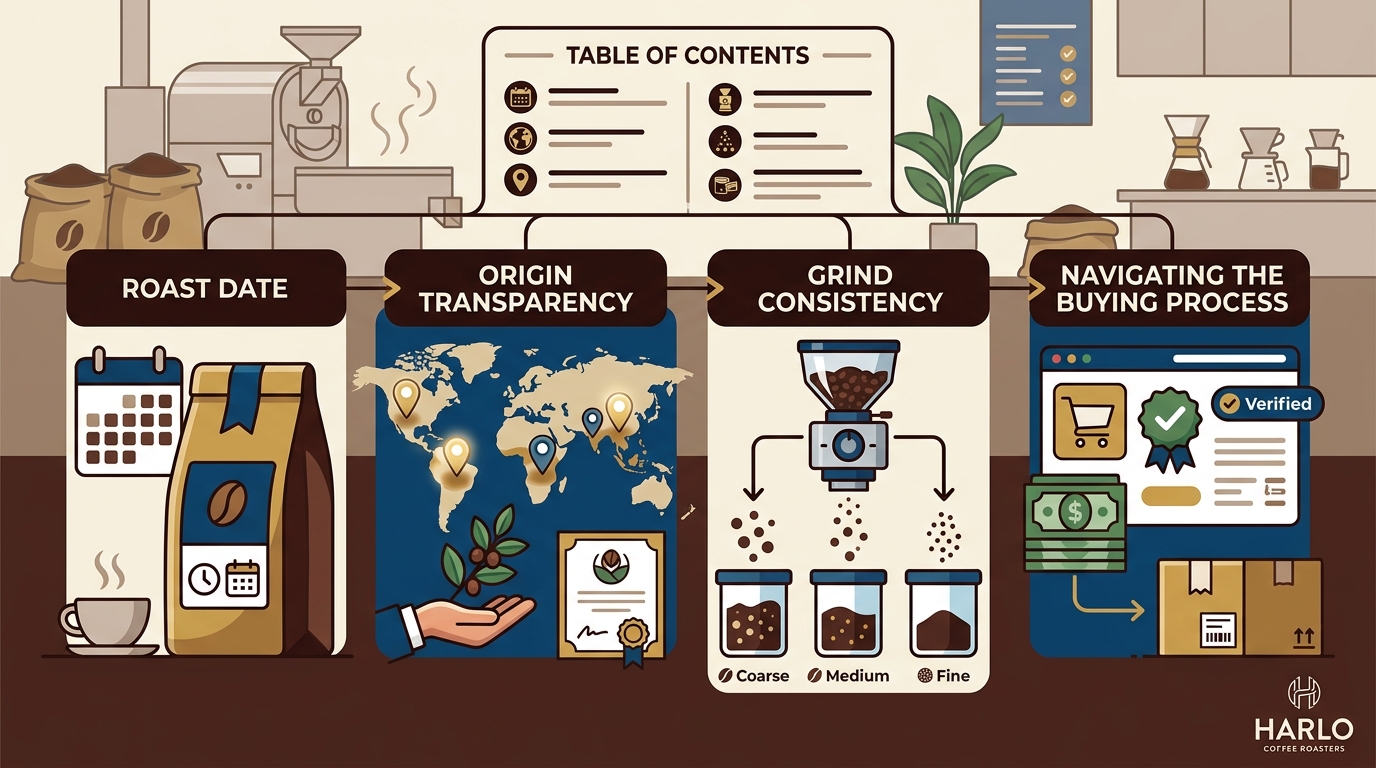
Choosing the best single origin coffee online requires evaluating roast date, origin transparency, and grind consistency. Harlo Coffee Roasters provides a framework for assessing these factors. This guide covers how to choose, verify credentials, understand pricing, and navigate the buying process for premium beans.
How to Choose Quality Beans
Single origin coffee is coffee sourced from a specific farm, region, or country rather than a mix of multiple origins. The primary differentiator is the roast date. Freshness is the single most important factor in flavor retention. Look for a roast date on the bag, not just a best by date. A best by date can be months in the future, while the coffee may have been roasted weeks ago. Harlo Coffee Roasters emphasizes that the first cup is everything, which starts with knowing exactly when the beans were roasted.
Origin Transparency
High quality roasters provide specific origin details. This includes the country, region, and often the specific farm or cooperative. Vague labels like 100% Arabica without a region are a red flag. Specificity allows you to track flavor profiles. For example, Ethiopian coffees often have floral notes, while Colombian coffees tend to be balanced and nutty. For additional details, review the .
Processing Method
The processing method significantly impacts taste. Washed coffees are clean and bright. Natural coffees are fruity and sweet. Honey processed coffees fall in between. Knowing the processing method helps you predict the flavor profile. It also indicates the level of care taken during production. For additional details, review the Customer Experience.
Questions to Ask Before Buying
Before committing to a purchase, ask specific questions to the roaster. These questions reveal the level of care and transparency in their operations. For additional details, review the Frequently Asked Questions.
When Was It Roasted?
This is the most critical question. If the roaster does not provide a roast date, do not buy. You need to know the age of the coffee. Ideally, you want coffee roasted within the last 14 to 21 days. This window allows the beans to degas while retaining peak flavor.
Where Did It Come From?
Ask for the specific farm or cooperative. Reputable roasters build direct relationships with producers. They can tell you the altitude, variety, and processing method. This level of detail is a hallmark of specialty coffee.
What Is the Grind Size?
If buying ground coffee, ask about the grind size. It should match your brewing method. A coarse grind for French press is different from a fine grind for espresso. Harlo Coffee Roasters offers a grind guide to help you select the right size for your equipment.
Verifying Claims and Credentials
Many online sellers make claims that are difficult to verify. You must check that a claim or credential is real before trusting it. Certifications like Organic or Fair Trade are regulated. You can verify these by checking the certifying body website. Look for the certification number on the bag. If the number is not listed, the claim is likely false.
Checking Roast Dates
Some roasters print the roast date on the bag. Others provide it in the product description. If it is not visible, contact customer service. A reputable roaster will provide this information promptly. If they refuse, they are likely selling stale coffee.
Verifying Origin
Check the import records if possible. For large roasters, this data is often public. For smaller roasters, ask for the import documentation. This proves the coffee actually came from the stated origin. It prevents mislabeling, which is a common issue in the industry.
The Online Buying Process
Buying coffee online follows a specific sequence. First, you select the coffee and grind size. Next, you place the order. The roaster then roasts the beans to order. Finally, they ship the coffee to your door. This process ensures freshness. The timeline is usually 3 to 7 days from order to delivery. This is faster than buying from a warehouse, where coffee may sit for months.
Ordering Steps
Start by browsing the catalog. Read the tasting notes. Select the quantity. Choose the grind size. Add to cart. Proceed to checkout. Provide shipping details. Confirm the order. The roaster receives the order and begins roasting. The coffee is packed and shipped. You receive the package. You brew the coffee.
Shipping Considerations
Shipping time matters. If you need coffee immediately, look for expedited shipping. Standard shipping may take longer. Check the estimated delivery date before ordering. Some roasters offer free shipping on subscriptions. This can save money over time.
Understanding Price Drivers
Price Ranges
Subscription Savings
Subscriptions often offer discounts. You may save 10% to 20% compared to one time purchases. This is because the roaster can plan production more efficiently. It also reduces packaging waste. Subscriptions ensure you always have fresh coffee. You do not have to remember to reorder.
Common Mistakes to Avoid
What goes wrong when buying coffee online is usually related to freshness or grind size. The most common mistake is buying coffee that is already stale. If the roast date is more than 30 days old, the flavor is compromised. Another mistake is buying the wrong grind size. A fine grind in a French press will clog the filter. A coarse grind in an espresso machine will not extract properly. Always check the grind guide.
Ignoring the Roast Date
Many buyers ignore the roast date. They focus on the price or the brand. This is a mistake. Freshness is more important than brand name. A lesser known roaster with a fresh roast date will outperform a famous brand with a stale roast date. Always check the date.
Buying in Bulk
Buying in bulk can be a mistake. Coffee loses flavor over time. If you buy a 5 pound bag, you may not finish it before it goes stale. It is better to buy smaller quantities more frequently. This ensures you always have fresh coffee. It also allows you to try different origins.
Single Origin vs. Blends
Flavor Profiles
Blends are designed to be balanced. They often have notes of chocolate, nuts, and caramel. Single origins are more complex. They can be fruity, floral, or spicy. The flavor profile changes with the origin. Ethiopian coffees are often bright and acidic. Brazilian coffees are often low acid and nutty. Understanding these differences helps you choose.
Consistency vs. Exploration
Blends offer consistency. You know what to expect. Single origins offer exploration. Each bag is a new experience. This is the main difference. Choose based on your goal. If you want reliability, choose a blend. If you want variety, choose single origin.
Choosing for Specific Needs
How the answer changes for a particular case depends on your brewing method and taste preference. If you use an espresso machine, you need a fine grind. If you use a pour over, you need a medium grind. If you use a French press, you need a coarse grind. The grind size is critical. It determines the extraction rate. The wrong grind size leads to over or under extraction. This results in bitter or sour coffee.
Espresso Users
Pour Over Users
Pour over users benefit from light and medium roasts. These roasts highlight the acidity and sweetness. They are ideal for pour over. The method allows for a clean cup. It showcases the origin characteristics. Look for washed coffees. They are clean and bright. They are perfect for pour over.
Consumer Protections and Standards
Labeling Laws
Labeling laws require accurate information. The origin must be stated. The weight must be stated. The roast date is not always required by law, but it is best practice. If a roaster claims a certification, it must be valid. You can report false claims to the Federal Trade Commission (FTC). They enforce consumer protection laws. This ensures that you get what you pay for.
Return Policies
Regional Sourcing and Logistics
Shipping Zones
Shipping zones determine the cost and time. Zone 1 is usually the contiguous US. Zone 2 is Alaska and Hawaii. Zone 3 is international. Shipping costs vary by zone. Check the shipping policy before ordering. It will list the costs and times for each zone. This helps you plan your budget.
Local Regulations
Local regulations may affect what you can buy. Some states have specific labeling requirements. Check your local laws. They may require certain information on the bag. This is rare but possible. Most states follow federal laws. These laws are consistent across the country. You do not need to worry about state specific regulations in most cases.
Timing Your Purchase
When to act and how timing changes the outcome is critical. The best time to buy is when the coffee is freshly roasted. This is usually within 14 to 21 days of the roast date. If you buy too early, the coffee may not have degassed. If you buy too late, it may be stale. The ideal window is 7 to 14 days after roasting. This is when the flavor is at its peak. Plan your purchase accordingly. Order when you need the coffee. Do not order months in advance.
Seasonal Availability
Some coffees are seasonal. They are only available during certain months. This is because the harvest is seasonal. If you want a specific coffee, buy it when it is available. It may not be available next year. Check the availability before ordering. Some roasters sell out of popular coffees. Act quickly if you want a specific lot.
Subscription Timing
Subscriptions are timed to your schedule. You choose the frequency. Weekly, bi weekly, or monthly. The coffee is shipped on that schedule. This ensures you always have fresh coffee. You do not have to remember to reorder. The timing is consistent. It matches your consumption rate. This is the most convenient option.
Long Term Flavor Development
Storage Impact
Storage impacts the rate of decline. Keep coffee in an airtight container. Store it in a cool, dark place. Do not refrigerate or freeze it. Moisture and heat accelerate staling. Oxygen is the enemy. Keep the bag sealed until you are ready to brew. This slows the decline. It extends the peak flavor window. Proper storage is essential for long term quality.
Consistency Over Time
Consistency is a long term goal. If you like a specific coffee, buy it regularly. The flavor may vary slightly between batches. This is normal. It is due to natural variations in the crop. The roaster aims for consistency. They adjust the roast profile to match the previous batch. This ensures a consistent cup. You can expect a similar flavor each time. Minor variations are acceptable. Major changes are not.
Key Takeaways
- Always check the roast date. Freshness is the most important factor.
- Look for specific origin details. Vague labels are a red flag.
- Verify certifications by checking the certifying body website.
- Choose the correct grind size for your brewing method.
- Buy in smaller quantities to ensure freshness.
- Consider subscriptions for convenience and savings.
- Store coffee in an airtight container in a cool, dark place.
- Plan your purchase to align with the peak flavor window.
Frequently Asked Questions
What is the best time to buy coffee online?
The best time is when the coffee is roasted within 14 to 21 days of delivery. This ensures peak flavor. Order when you need the coffee. Do not order months in advance.
How do I know if the coffee is fresh?
Check the roast date on the bag. If it is not listed, contact the roaster. Fresh coffee is roasted within the last 30 days. Ideally, it is roasted within the last 14 days.
What is the difference between single origin and blend?
How should I store coffee beans?
Store them in an airtight container in a cool, dark place. Do not refrigerate or freeze them. Keep the bag sealed until you are ready to brew.
Can I return coffee if I do not like it?
Check the return policy before buying. Some roasters allow returns. Others do not. A good return policy indicates confidence in the product.
What is the best grind size for pour over?
A medium grind is best for pour over. It is similar to sand. It allows for even extraction. A fine grind will clog the filter. A coarse grind will under extract.
How long does shipping take?
Shipping usually takes 3 to 7 days. This depends on the roaster and your location. Check the estimated delivery date before ordering. Expedited shipping is available for faster delivery.