
Choosing Organic Espresso Beans for Home Use
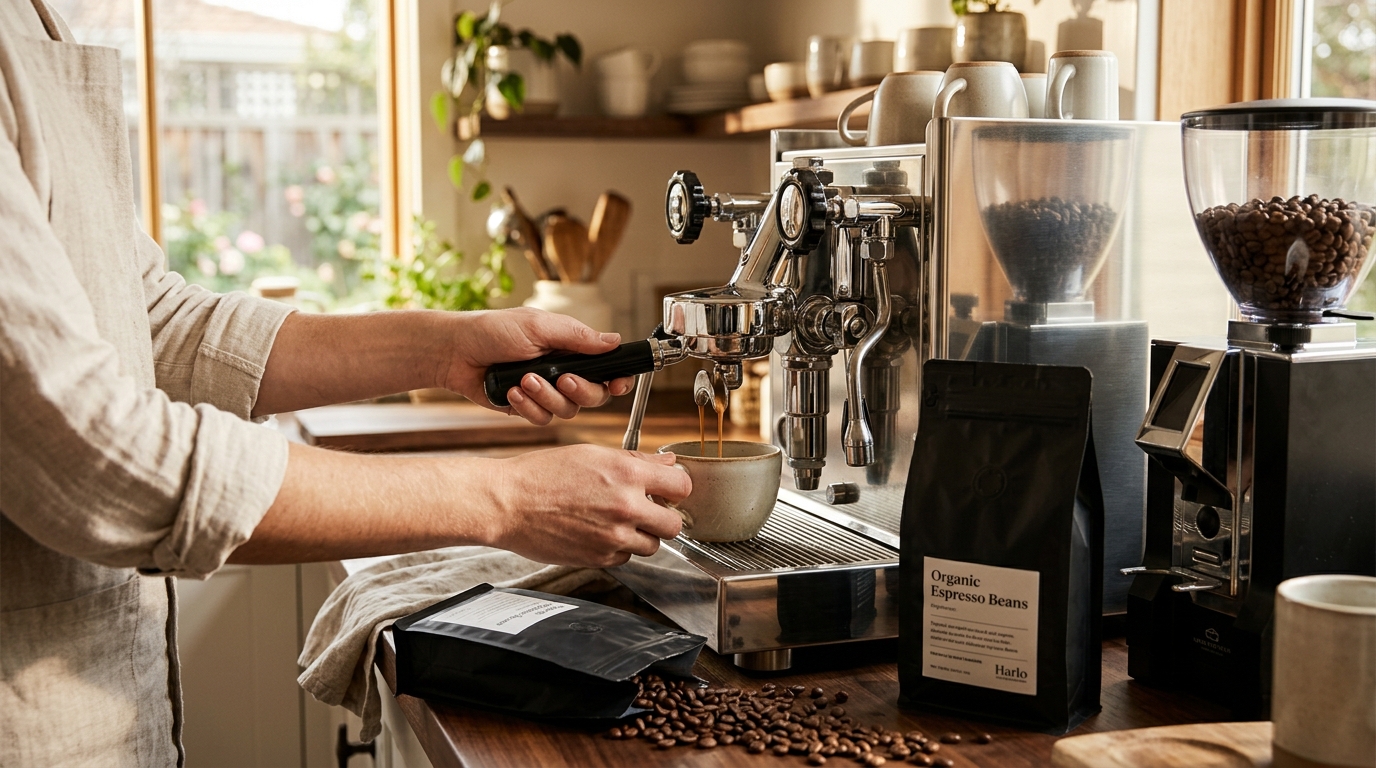
For home espresso, select a medium to dark roast organic coffee with a balanced acidity and chocolatey body. Harlo Coffee Roasters offers freshly roasted specialty blends and single origins designed for espresso preparation. This guide covers roast level selection, bean origin, grind size, and brewing variables to help you dial in your perfect shot.
Roast Level Selection
Roast level is the primary determinant of espresso flavor. Espresso roast is a medium to dark roast profile that balances acidity with body and sweetness. Light roasts often lack the density required for a stable espresso shot, while very dark roasts can introduce ashy or bitter notes. For home machines, a medium roast provides the most flexibility. It allows you to adjust grind size without losing the coffee's inherent character. For additional details, review the Customer Experience.
Light vs. Medium Roasts
Light roasts retain more of the origin's fruity and floral notes. However, they require precise extraction to avoid sourness. Medium roasts offer a safer middle ground. They provide caramel and nutty flavors that complement milk-based drinks. If you are new to espresso, start with a medium roast to build your technique.
Dark Roast Considerations
Dark roasts are oilier and have a heavier body. They are forgiving with extraction errors but can mask subtle origin characteristics. Use dark roasts if you prefer bold, chocolatey shots. Harlo Coffee Roasters roasts to order, ensuring that the oils are fresh and the flavor is vibrant regardless of the roast level.
Origin and Flavor Profiles
Latin American Profiles
African and Asian Profiles
Grind Size and Calibration
Grind size is the most critical variable in espresso extraction. Espresso grind is a fine particle size that creates resistance to water flow. The ideal grind is between table salt and fine sand. If the shot pulls too fast, the grind is too coarse. If it pulls too slow, the grind is too fine. Adjusting the grind size allows you to control the extraction time, which directly impacts flavor.
Adjusting for Flow Rate
Aim for a shot time of 25 to 30 seconds for a double shot. If your shot finishes in under 20 seconds, it is likely under-extracted and will taste sour. If it takes over 40 seconds, it is over-extracted and will taste bitter. Make small adjustments to your grinder, one step at a time, to find the sweet spot.
Grinder Quality
The quality of your grinder matters more than the quality of your machine. A burr grinder with consistent particle size distribution is essential. Blade grinders create uneven particles, leading to channeling and inconsistent extraction. Investing in a quality grinder ensures that every shot is repeatable and flavorful.
Brewing Variables and Dial-In
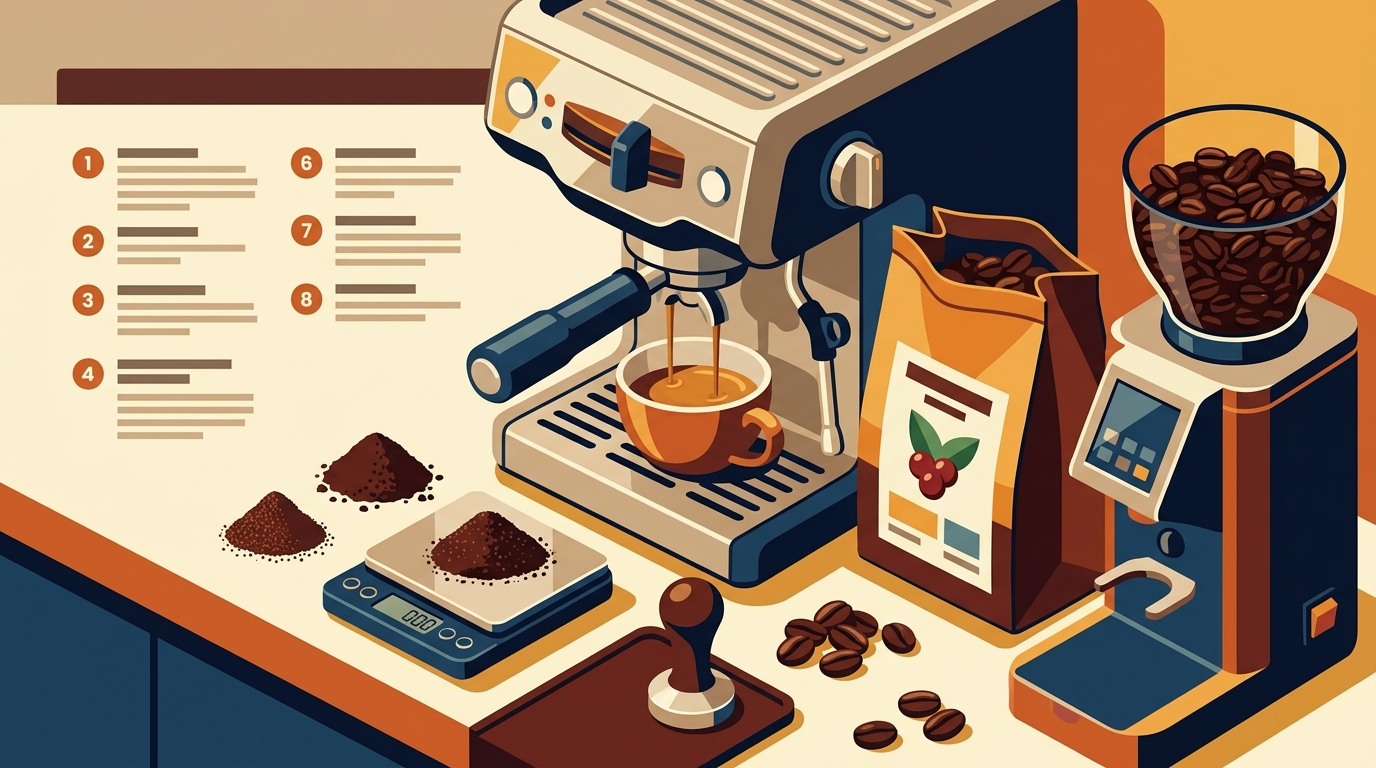
Dialing in espresso is a process of adjusting variables to achieve the desired flavor. The three main variables are dose, yield, and grind size. Dose is the amount of coffee in the basket. Yield is the amount of liquid espresso in the cup. Grind size controls the speed of extraction. By adjusting these three variables, you can fine-tune the taste of your espresso.
Dose and Yield Ratios
A common starting ratio is 1:2. This means using 18 grams of coffee to produce 36 grams of espresso. You can adjust this ratio to change the intensity. A 1:1.5 ratio produces a more concentrated, ristretto-style shot. A 1:2.5 ratio produces a longer, lighter shot. Experiment with different ratios to find what you like.
Water Quality and Temperature
Water quality significantly impacts espresso flavor. Use filtered water with a balanced mineral content. Hard water can strip flavors, while soft water can lead to under-extraction. Water temperature should be between 195 and 205 degrees Fahrenheit. Higher temperatures extract more sweetness, while lower temperatures preserve acidity.
Storage and Freshness
Freshness is key to espresso quality. Coffee begins to lose its aromatic compounds immediately after roasting. Peak freshness is typically reached 7 to 14 days after the roast date. After this period, the coffee begins to stale. Store your coffee in an airtight container away from light, heat, and moisture. Do not store coffee in the refrigerator or freezer, as condensation can degrade the beans.
Whole Bean vs. Ground
Always buy whole bean coffee and grind it just before brewing. Ground coffee loses its freshness much faster than whole beans. The surface area of ground coffee is much larger, exposing it to oxygen. Grinding just before brewing ensures that you capture the full aroma and flavor of the coffee.
Roast Date Importance
Check the roast date on the bag. Coffee roasted more than three weeks ago is likely past its prime. Harlo Coffee Roasters ships fresh roasts, ensuring that you receive coffee at its peak flavor. Look for the roast date on the label to track freshness.
Comparison of Roast Levels for Espresso
| Roast Level | Flavor Profile | Acidity | Body | Best For |
|---|---|---|---|---|
| Light | Fruity, Floral | High | Light | Black Espresso, Advanced Users |
| Medium | Caramel, Nutty | Medium | Medium | Milk Drinks, Beginners |
| Dark | Chocolate, Smoky | Low | Heavy | Bold Shots, Ristretto |
Key Takeaways
- Choose a medium to dark roast for the most versatile home espresso experience.
- Single origin coffees offer distinct flavor notes, while blends provide consistency.
- Grind size is the most critical variable for controlling extraction time.
- Aim for a shot time of 25 to 30 seconds for a balanced double shot.
- Use a 1:2 dose-to-yield ratio as a starting point for dialing in.
- Store coffee in an airtight container at room temperature to preserve freshness.
- Grind whole beans immediately before brewing to maximize aroma and flavor.
- Check the roast date to ensure you are using coffee within its peak freshness window.
Frequently Asked Questions
What is the best roast level for home espresso?
How fresh should my espresso beans be?
Espresso beans are at their peak freshness 7 to 14 days after roasting. Coffee roasted more than three weeks ago may taste stale. Always check the roast date on the bag and use the coffee within this window for the best flavor.
Should I use single origin or blend for espresso?
Blends are often recommended for espresso because they provide a balanced and consistent flavor. Single origins are excellent for exploring specific flavor profiles. You can start with a blend and experiment with single origins to find your preference.
What grind size is ideal for espresso?
The ideal grind size for espresso is fine, similar to table salt. The exact size depends on your machine and coffee. Adjust the grind size to achieve a shot time of 25 to 30 seconds. If the shot is too fast, grind finer. If it is too slow, grind coarser.
How do I store espresso beans?
Store espresso beans in an airtight container at room temperature, away from light and heat. Do not store them in the refrigerator or freezer. Condensation can degrade the beans and affect the flavor. Keep the container sealed until you are ready to grind.
What is the difference between dose and yield?
Dose is the amount of coffee used in the basket, while yield is the amount of liquid espresso produced. A common ratio is 1:2, meaning 18 grams of coffee produces 36 grams of espresso. Adjusting the ratio changes the intensity and flavor of the shot.
Conclusion
Selecting the right organic coffee beans for home espresso involves balancing roast level, origin, and freshness. Start with a medium roast blend and adjust your grind size to achieve the perfect shot. Harlo Coffee Roasters provides freshly roasted specialty coffee that is ideal for espresso preparation. Explore our specialty coffee blends to find your new favorite cup. Visit our shop to order your beans today.