
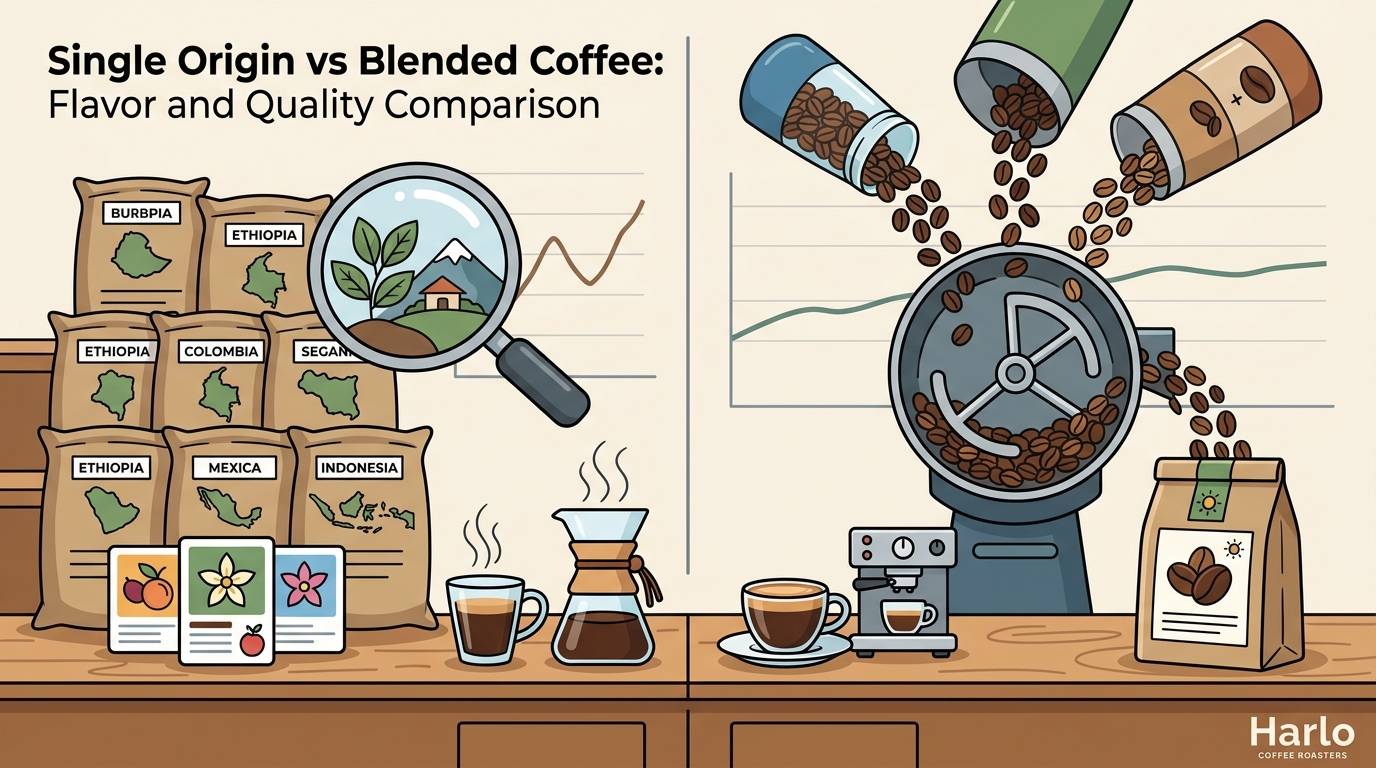
Single origin coffee is sourced from one specific geographic region, while blended coffee combines beans from multiple origins. This distinction directly impacts flavor clarity and consistency. Single origins highlight unique terroir and processing methods, whereas blends prioritize balance and uniformity across batches. Understanding these differences helps you choose the right coffee for your brewing method and taste preferences.
Flavor Profiles: Clarity vs Consistency
Single origin coffee is defined by its ability to express the specific characteristics of its growing region. For example, an Ethiopian single origin often features bright citrus, floral aromatics, and stone fruit notes. These flavors result from high-altitude farming and specific processing methods like washing. The clarity of these notes allows drinkers to taste the distinct identity of the farm or region.
Blended coffee, on the other hand, is crafted to achieve a specific, consistent flavor profile. A blend might combine a bright Latin American bean with a heavier African bean to create a balanced cup. This approach ensures that the coffee tastes similar from one bag to the next, regardless of seasonal variations in individual crops. At Harlo Coffee Roasters, our signature blends are designed to deliver smooth, approachable flavors that remain reliable for daily drinking.
Quality Standards and Sourcing
Quality in single origin coffee is often measured by the score of the green bean. Specialty grade coffee typically scores 80 points or higher on a 100-point scale. This scoring system evaluates factors like bean density, moisture content, and cupping notes. A high-scoring single origin indicates exceptional care in farming and processing. For instance, our Ethiopian Single Origin is selected for its vibrant fruit character and clean finish, reflecting high-quality sourcing.
Blends also adhere to strict quality standards, but the focus shifts to how different beans interact. A roaster must ensure that no single bean in the blend overpowers the others. This requires careful selection of components that complement each other. The quality of a blend depends on the quality of its individual parts, but the final result is a harmonious whole rather than a spotlight on one origin.
Brewing Method Compatibility
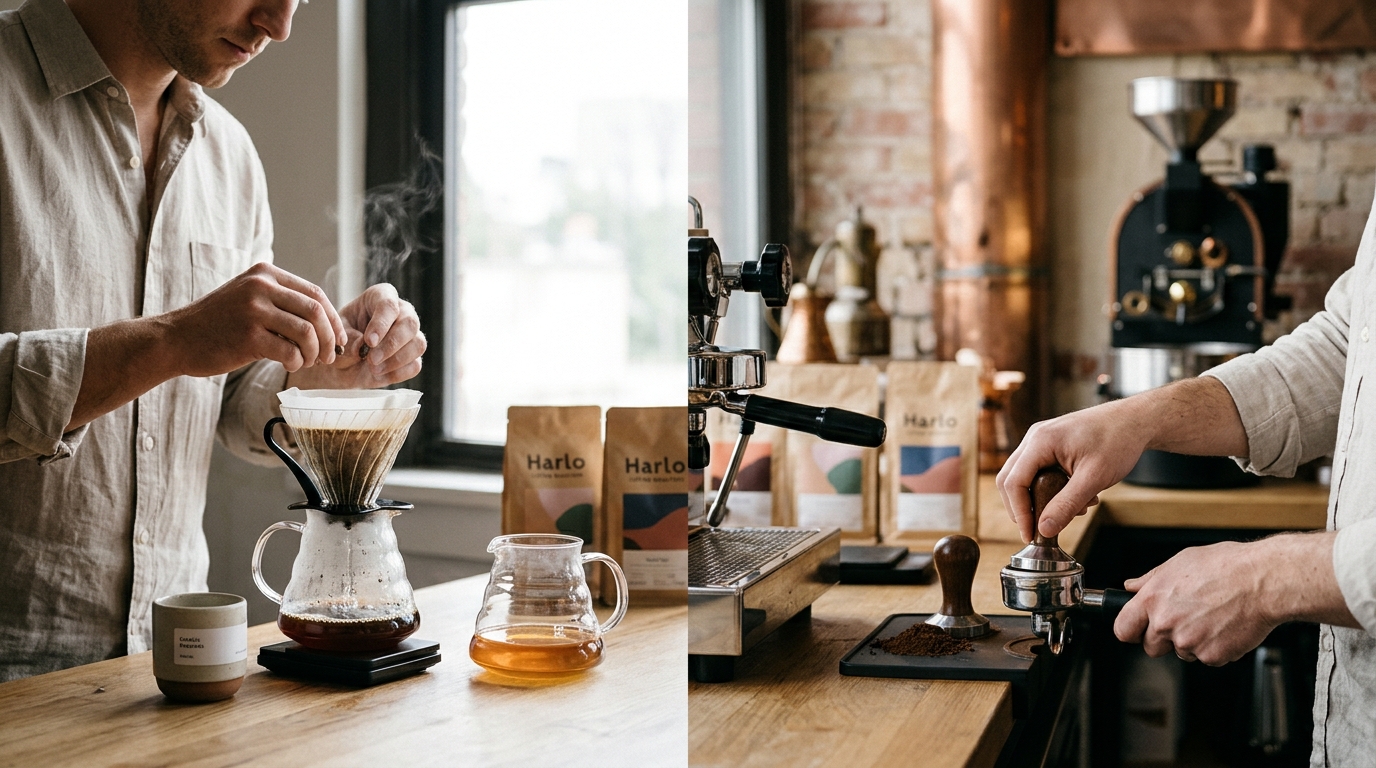
The choice between single origin and blended coffee often depends on your brewing method. Single origins are particularly well-suited for pour over and drip brewing, where clarity is key. These methods allow the subtle nuances of the coffee to shine through. For example, a washed Colombian single origin might taste of peach and cherry when brewed as a pour over. You can explore our Single Origin Coffee collection to find beans that match your preferred brewer.
Blends are often preferred for espresso and milk-based drinks. The robust body and balanced acidity of a blend can cut through milk and sugar more effectively than a delicate single origin. A well-crafted espresso blend provides the sweetness and structure needed for a great latte or cappuccino. Our Brew Guides offer detailed instructions for optimizing both single origins and blends across various brewing methods.
Freshness and Shelf Life
Freshness impacts both single origin and blended coffee, but in slightly different ways. Single origins can lose their delicate aromatic compounds faster than robust blends. This is because the volatile oils that carry flavor notes are more susceptible to oxidation. To maximize freshness, it is best to consume single origin coffee within four to six weeks of roasting. Grinding the beans just before brewing preserves these delicate flavors.
Blends may have a slightly longer perceived freshness window due to their robust flavor profile. However, all coffee degrades over time. At Harlo Coffee Roasters, we roast every batch to order in Los Angeles to ensure peak freshness. Our Coffee Subscription service delivers freshly roasted coffee on your schedule, ensuring you never drink stale beans. This approach guarantees that whether you choose a single origin or a blend, you are tasting the coffee at its best.
Key Takeaways
- Single origin coffee highlights the unique flavor profile of a specific region or farm.
- Blended coffee is designed for consistency and balance across multiple batches.
- Single origins are ideal for pour over and drip brewing due to their clarity.
- Blends are often better suited for espresso and milk-based drinks.
- Freshness is critical for both, but single origins may lose delicate notes faster.
- Quality in both types depends on careful sourcing and roasting techniques.
Frequently Asked Questions
Is single origin coffee always better than blended coffee?
No, single origin coffee is not inherently better than blended coffee. The choice depends on your personal taste preferences and brewing method. Single origins offer clarity and distinct flavors, while blends provide consistency and balance. Both can be high-quality if sourced and roasted with care.
What is the main difference in flavor between single origin and blends?
The main difference is clarity versus balance. Single origin coffee allows you to taste the specific characteristics of its origin, such as fruit or floral notes. Blended coffee combines different beans to create a harmonious, balanced flavor profile that remains consistent over time.
Which type of coffee is better for espresso?
Blended coffee is often better for espresso because it provides the body and sweetness needed to cut through milk. However, some single origins work well for espresso if they have sufficient body and acidity. It ultimately depends on the specific coffee and your taste preferences.
How does freshness affect single origin coffee?
Freshness is crucial for single origin coffee because delicate aromatic compounds degrade over time. To enjoy the full flavor profile, it is best to consume single origin coffee within four to six weeks of roasting. Grinding beans just before brewing helps preserve these notes.
Can I find both single origin and blended coffee at Harlo Coffee Roasters?
Yes, Harlo Coffee Roasters offers a wide range of both single origin and blended coffees. Our Specialty Coffee collection includes options for every taste preference and brewing method. We roast all our coffee fresh in Los Angeles to ensure quality.
Conclusion
Choosing between single origin and blended coffee comes down to what you value in your cup. If you want to explore the unique flavors of different regions, single origin coffee is the way to go. If you prefer a consistent, balanced cup that works well with milk, a blend might be your best choice. At Harlo Coffee Roasters, we offer both options, roasted fresh to order in Los Angeles. Explore our Best Selling Coffee to find your new favorite cup.