
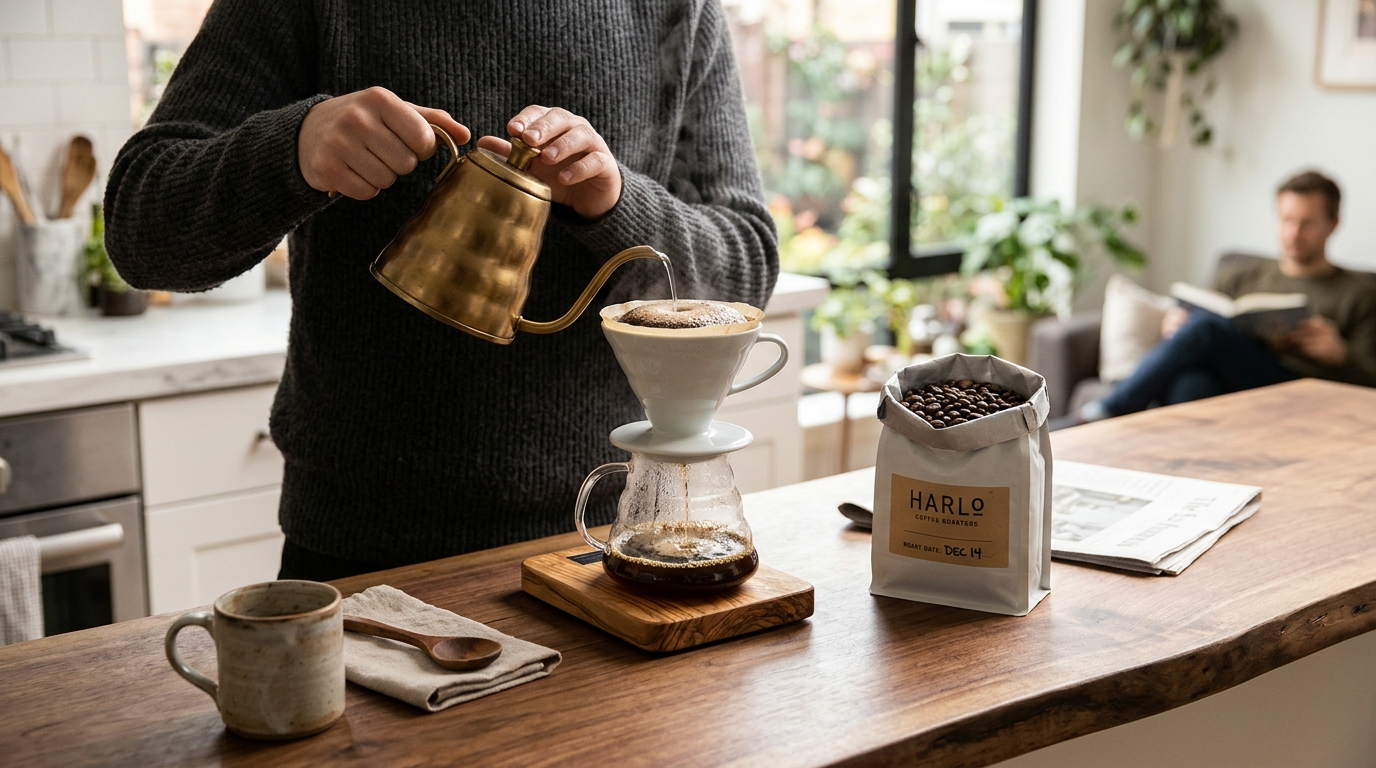
For pour over brewing, the ideal freshness window is typically 7 to 21 days after the roast date. This period allows the beans to release carbon dioxide while retaining volatile aromatic compounds. At Harlo Coffee Roasters, we roast in small batches in Los Angeles to ensure every bag reaches your door within this critical freshness window.
The Science of Degassing
Roasting coffee triggers a chemical reaction that produces carbon dioxide. This gas remains trapped inside the bean structure immediately after roasting. If you brew coffee that is too fresh, the gas escapes rapidly during extraction, creating a channeling effect that prevents water from evenly saturating the grounds. This results in an uneven extraction where some parts are over-extracted and others are under-extracted.
Specialty coffee is defined by its clarity and balance, which requires a stable bed of grounds during brewing. The degassing process is not a flaw but a necessary biological phase. As the beans age, the internal pressure drops, and the gas releases more slowly. This stability allows the water to flow through the filter at a consistent rate, extracting the desired sugars and acids without the chaotic bubbling seen in very fresh beans.
Understanding this mechanism helps you avoid the frustration of a sour or bitter cup. The goal is to wait until the beans have sufficiently degassed but before the aromatic compounds begin to dissipate into the air. This balance is the foundation of a high-quality pour over experience.
Aroma Retention and Volatile Compounds
While degassing is necessary for extraction, it also leads to the loss of flavor. Volatile aromatic compounds are the molecules responsible for the complex notes of fruit, floral, and chocolate in your cup. These compounds are highly sensitive to oxygen and time. Once the bag is opened, the clock starts ticking on the preservation of these delicate aromas.
Research in food science indicates that the peak aromatic profile of coffee occurs shortly after the degassing phase is complete. After this peak, the rate of flavor loss accelerates. This is why a coffee that is three weeks old may taste flat or stale compared to one that is ten days old. The structural integrity of the bean remains, but the sensory experience diminishes significantly. according to Food Science Graduate
At Harlo Coffee Roasters, we prioritize sourcing high-altitude Arabica beans that are naturally dense and aromatic. These beans retain their flavor profile longer than lower-quality varieties. By roasting to order, we ensure that the volatile compounds are preserved until the moment you brew.
Grind Freshness and Surface Area
The freshness of the bean is only half the equation. The other half is the freshness of the grind. When you grind coffee, you increase the surface area of the bean by thousands of times. This exposes the internal structure to oxygen immediately. A pre-ground coffee bag loses its volatile aromas much faster than whole beans, even if the roast date is recent.
For pour over brewing, grinding immediately before brewing is the single most impactful step you can take. The difference between a freshly ground cup and a pre-ground cup is often the difference between a vibrant, complex drink and a dull, flat beverage. If you do not have a grinder, you can still benefit from freshness by purchasing whole beans and grinding only what you need for each cup.
Our coffee grind size guide explains the optimal particle size for pour over brewers. However, no grind size can compensate for stale beans. The combination of a fresh roast date and a fresh grind is the gold standard for home brewing.
Storage Conditions and Oxygen Exposure
Time is not the only enemy of freshness. Oxygen, light, heat, and moisture all accelerate the degradation of coffee. Storing coffee in a clear container on a windowsill is a common mistake that drastically shortens the usable life of the beans. The ideal storage environment is cool, dark, and airtight.
One-way valve bags are designed to allow carbon dioxide to escape while preventing oxygen from entering. This is why you should keep your coffee in its original bag until you are ready to brew it. Transferring coffee to a jar or container introduces oxygen and light, which begins the oxidation process immediately. If you must transfer your coffee, use an opaque, airtight container and store it in a cupboard or pantry.
Freezing coffee is a controversial topic. While it can extend the shelf life of whole beans, it introduces moisture and temperature fluctuations that can damage the bean structure. For most home brewers, it is better to buy smaller quantities of coffee that you will consume within two weeks rather than freezing a large bag for months.
A Practical Freshness Timeline
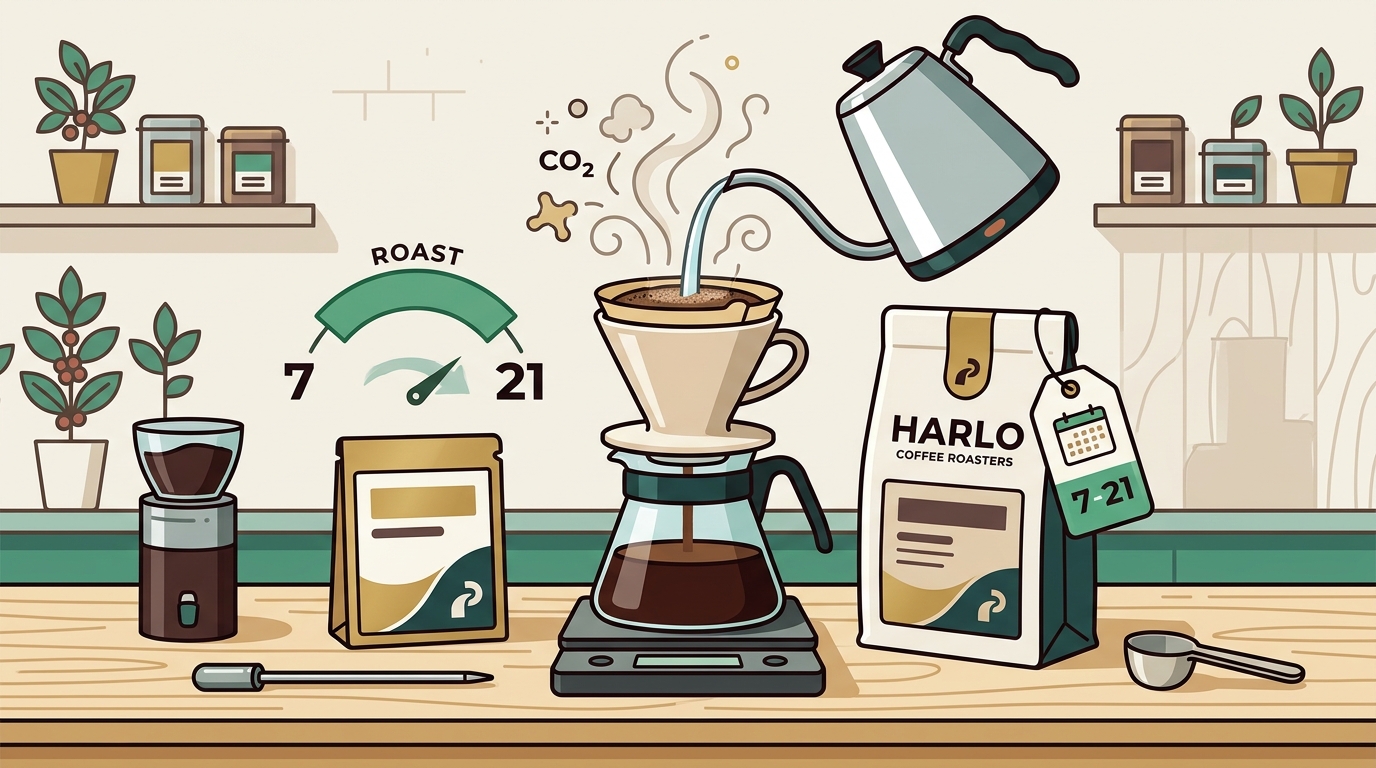
Here is a practical timeline for evaluating your coffee beans. On day one to three, the beans are too fresh for most pour over methods. They will likely produce a gassy, uneven extraction. From day four to seven, the beans begin to stabilize. This is the early window where you can start brewing, though the flavor may still be evolving.
From day seven to fourteen, the coffee reaches its peak performance. The degassing is complete, and the aromatics are at their strongest. This is the ideal window for most specialty coffees. From day fifteen to twenty-one, the coffee is still very good, but you may notice a slight decline in brightness. After day twenty-one, the coffee begins to taste stale. The flavors become muted, and the cup lacks the vibrancy that defines specialty coffee.
To maximize your experience, check the roast date on your bag. If you are buying from a local roaster, ask for the date. If you are buying online, look for roasters who ship within 24 to 48 hours of roasting. Harlo Coffee Roasters offers subscription services that ensure you receive fresh coffee on a schedule that matches your consumption rate.
Key Takeaways
- The ideal freshness window for pour over coffee is 7 to 21 days after roasting.
- Beans must degas to allow for even extraction during brewing.
- Grinding coffee immediately before brewing preserves volatile aromatics.
- Store coffee in a cool, dark, and airtight environment to extend freshness.
- Pre-ground coffee loses flavor much faster than whole beans.
- Check the roast date on your bag to ensure you are within the peak window.
Frequently Asked Questions
How long after roasting should I wait to brew pour over?
Wait at least 4 to 7 days after roasting to allow the beans to degas. This ensures a stable extraction and prevents channeling.
Does grinding coffee affect its freshness?
Yes, grinding exposes the coffee to oxygen, which accelerates flavor loss. Grind immediately before brewing for the best results.
Can I store coffee in the freezer?
Freezing can extend shelf life but may introduce moisture. It is better to buy smaller quantities of fresh coffee than to freeze large bags.
What is the best way to store coffee beans?
Store beans in their original one-way valve bag or an opaque, airtight container in a cool, dark place.
How do I know if my coffee is stale?
Stale coffee lacks aroma and tastes flat or dull. If the cup lacks vibrancy, the beans are likely past their peak freshness.
Conclusion
Freshness is the most critical factor in pour over brewing. By understanding the degassing process and the importance of volatile aromatics, you can optimize your brewing experience. Aim for a roast date within the last two weeks and grind your beans immediately before brewing. For consistent freshness, consider a subscription from Harlo Coffee Roasters to receive freshly roasted coffee delivered to your door.