
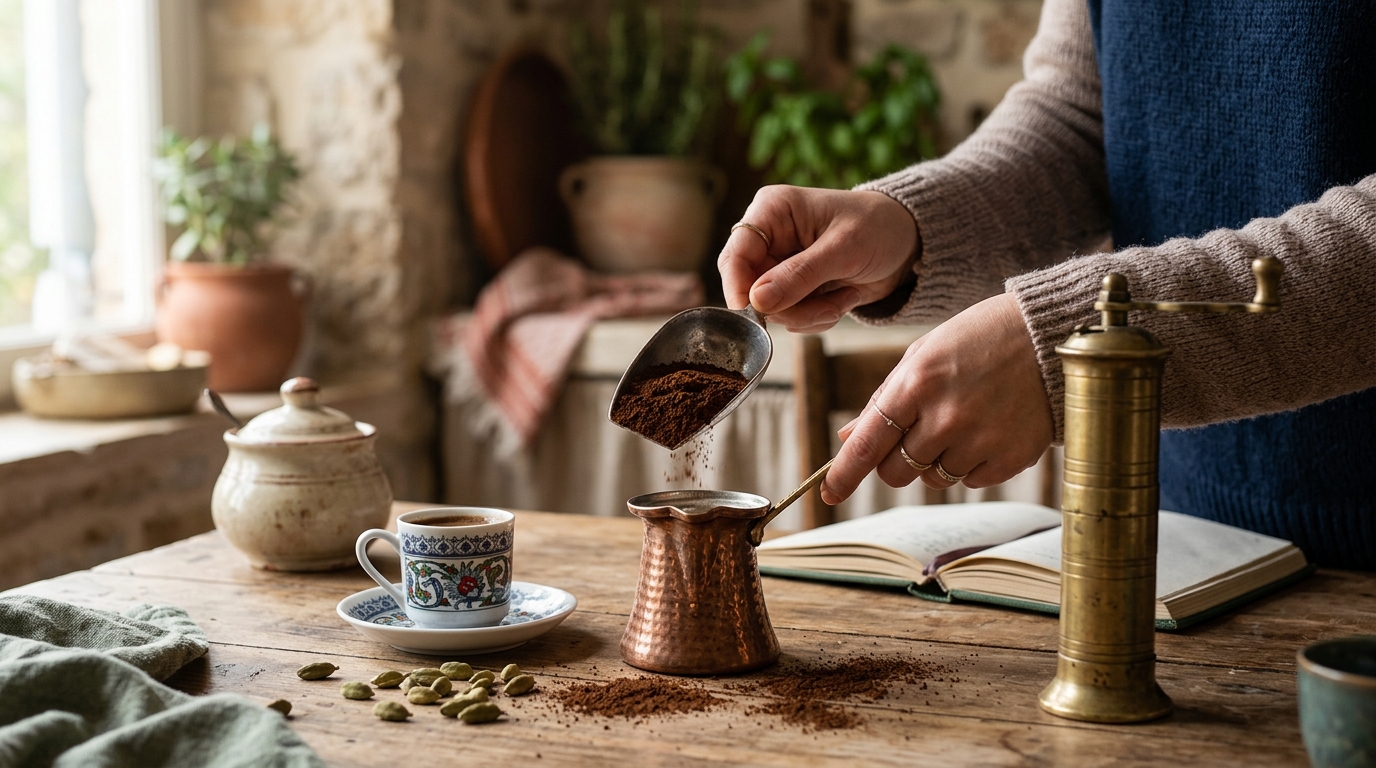
Harlo Coffee Roasters offers a dedicated Mediterranean coffee line that includes finely ground beans prepared specifically for Turkish coffee. This guide explains how to identify authentic organic Turkish coffee with cardamom, how to evaluate specialty roasters, and how to brew the perfect cup at home. We cover the nuances of cardamom integration, the importance of fresh roasting, and practical brewing techniques to maximize flavor.
Organic Cardamom Blends
Cardamom is a spice native to North-Eastern India and Southeast Asia, belonging to the family Zingiberaceae. It is widely recognized for its distinct aromatic profile, which complements the earthy notes of dark roast coffee. When selecting a Turkish coffee blend, the origin of the cardamom matters. Large cardamom, specifically, is an ancient spice that provides a robust, smoky flavor often preferred in traditional Middle Eastern preparations. For additional details, review the .
Understanding Organic Certification
Organic production is a regulated standard. The National Agricultural Statistics Service in cooperation with the USDA’s Risk Management Agency conducts surveys to gather data on certified organic crops in the United States. This regulatory oversight ensures that products labeled as organic meet specific criteria regarding soil management, pest control, and genetic modification. When shopping online, look for roasters who explicitly state the certification status of their spice blends. Not all coffee is organic, and not all cardamom is certified. Transparency in sourcing is the primary indicator of quality. For additional details, review the Customer Experience.
The Role of Cardamom in Coffee
Cardamom is often added during the roasting process or ground into the final product. This integration allows the essential oils of the spice to meld with the coffee oils. For Turkish coffee, the spice is typically pre-ground with the beans. This ensures a consistent flavor profile in every cup. Harlo Coffee Roasters provides a Mediterranean coffee category that caters to these traditional preferences, offering finely ground options suitable for the Turkish method.
Specialty Roasters
Specialty roasters are businesses that focus on high-quality, traceable coffee beans roasted in small batches. Unlike mass-market producers, specialty roasters prioritize flavor development and freshness. They often source directly from farmers, ensuring fair compensation and high-quality raw materials. When buying online, the reputation of the roaster is a critical factor. A reputable roaster will provide detailed information about the bean origin, roast date, and grind size. according to Data on small For additional details, review the Frequently Asked Questions.
Evaluating Freshness and Roast Dates
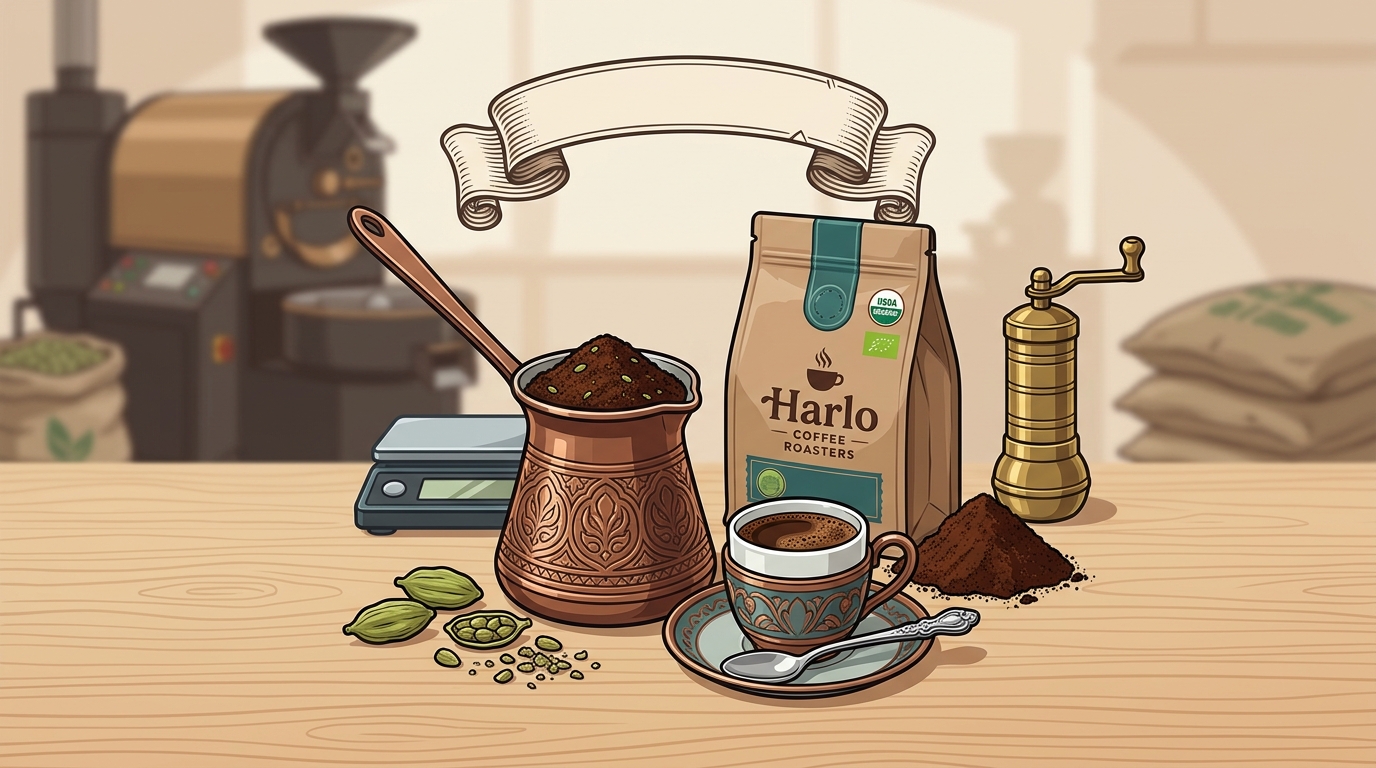
Freshness is the most significant variable in coffee quality. Coffee begins to lose its volatile aromatics immediately after roasting. Specialty roasters typically ship within days of the roast date. This ensures that the cardamom and coffee flavors are at their peak when you brew. Look for roasters who print the roast date on the bag. If a roaster does not provide this information, it may indicate older inventory. Harlo Coffee Roasters emphasizes that the first cup is everything, a philosophy that drives their commitment to fresh, small-batch roasting in Los Angeles.
Grind Size and Preparation
Turkish coffee requires a very fine grind, finer than espresso. The particles must be fine enough to settle at the bottom of the cup but not so fine that they clog the filter if one is used. Specialty roasters who offer Turkish coffee will provide a specific grind setting. This grind is often referred to as "powder" or "flour" fine. Using the wrong grind size can result in a bitter, over-extracted cup or a weak, under-extracted brew. Always check the roaster's grind guide to ensure you are selecting the correct option for your brewing method.
Brewing Techniques
Brewing Turkish coffee is a ritual that requires patience and precision. The traditional method involves heating water, coffee, and sugar (if desired) in a small pot called a cezve or ibrik. The mixture is heated slowly, allowing a foam to form. This foam is considered a mark of a well-brewed cup. The coffee is never boiled vigorously, as this can release bitter compounds. Instead, the heat is reduced when the foam rises, and the pot is removed from the heat just before it boils over.
Step-by-Step Brewing Guide
- Measure one heaping teaspoon of finely ground Turkish coffee per cup.
- Add cold water to the cezve. The ratio is typically 1:10 (coffee to water).
- Add cardamom if it is not pre-blended into the coffee.
- Place the cezve on low heat. Do not stir after the initial mix.
- Watch for the foam to rise. Remove from heat just before it boils.
- Pour a small amount of foam into each cup.
- Return to heat briefly to finish brewing, then pour the rest.
Common Mistakes to Avoid
One common error is using water that is too hot at the start. Starting with cold water allows for a more gradual extraction. Another mistake is stirring the coffee after it has started to heat. This can break the foam and lead to a flat cup. Finally, using a grind that is too coarse will result in a gritty texture. The fine grind of Turkish coffee is essential for the traditional experience. If you are new to this method, practice with a small batch to get a feel for the timing.
Key Takeaways
- Cardamom is a spice from the Zingiberaceae family that adds a distinct aromatic profile to coffee.
- Organic certification is regulated by the USDA, ensuring specific standards for crop production.
- Specialty roasters prioritize freshness, often shipping coffee within days of roasting.
- Turkish coffee requires a very fine grind, finer than espresso, for proper extraction.
- The foam in Turkish coffee is a key indicator of a well-brewed cup.
- Harlo Coffee Roasters offers a Mediterranean line with finely ground beans for Turkish preparation.
- Transparency in sourcing and roast dates are critical markers of quality in online coffee shopping.
- Starting with cold water and heating slowly is essential for a smooth, non-bitter cup.
Frequently Asked Questions
Is cardamom coffee the same as Turkish coffee?
No, they are not the same. Turkish coffee refers to a brewing method and a specific grind size. Cardamom is a spice that can be added to any coffee, but it is traditionally paired with Turkish coffee in Middle Eastern cultures. You can brew cardamom coffee using other methods, but the traditional experience is best achieved with the Turkish method.
How do I know if the cardamom is organic?
Check the product label for organic certification logos. The USDA regulates organic standards in the United States. Reputable roasters will specify if their spice blends are certified organic. If the label does not mention organic certification, assume the spice is conventionally grown.
What grind size is best for Turkish coffee?
Turkish coffee requires a very fine grind, often described as powder or flour fine. This is finer than espresso grind. The particles should be small enough to settle at the bottom of the cup. If the grind is too coarse, the coffee will taste weak and gritty.
Can I use pre-ground Turkish coffee with cardamom?
Yes, pre-ground Turkish coffee with cardamom is convenient and ensures a consistent flavor. However, whole bean coffee allows you to control the amount of spice. If you prefer a stronger cardamom flavor, you can add ground cardamom to whole bean Turkish coffee before brewing.
How long does Turkish coffee with cardamom stay fresh?
Ground coffee loses its freshness faster than whole bean. For optimal flavor, consume pre-ground Turkish coffee within two to four weeks of opening. Store it in an airtight container away from light and heat. The cardamom aroma will fade over time, so freshness is key.
Where can I buy Turkish coffee with cardamom online?
You can buy Turkish coffee with cardamom from specialty roasters like Harlo Coffee Roasters. Look for roasters that offer a Mediterranean or Middle Eastern coffee line. Ensure they provide a fine grind suitable for Turkish brewing. Check their website for roast dates and shipping policies to ensure freshness.
Do I need a special pot to brew Turkish coffee?
While a traditional cezve or ibrik is ideal, you can brew Turkish coffee in any small pot with a long handle. The key is to use a pot that allows you to monitor the foam closely. A wide-bottomed pot helps with even heating. Avoid using a French press or drip coffee maker, as these methods do not replicate the traditional texture and flavor.
Conclusion
Finding high-quality organic Turkish coffee with cardamom requires attention to sourcing, freshness, and grind size. Specialty roasters like Harlo Coffee Roasters provide the transparency and quality control needed for a superior brewing experience. By understanding the role of cardamom and the specifics of the Turkish brewing method, you can enjoy a rich, aromatic cup at home. Explore the Mediterranean coffee line to find a blend that suits your taste preferences. Freshness is the key to unlocking the full potential of these traditional flavors.