
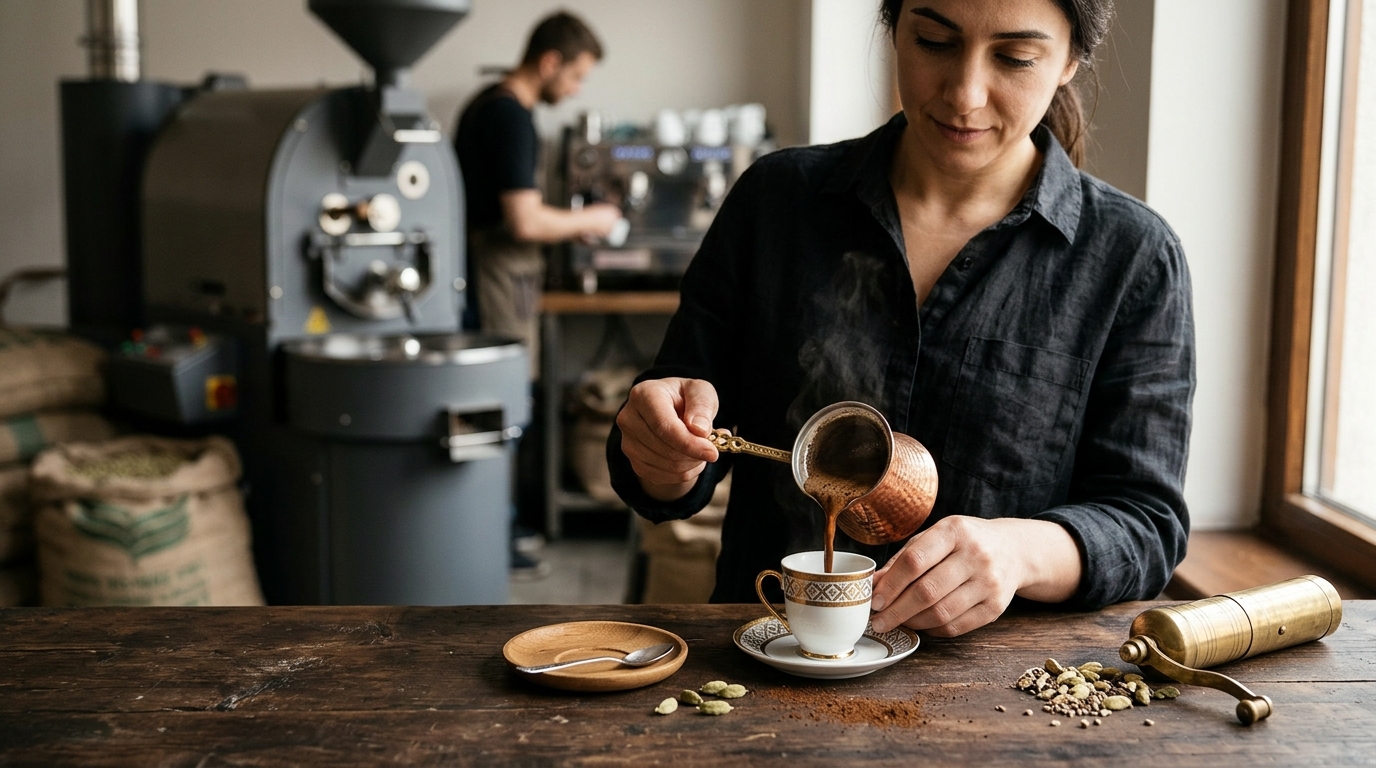
Organic Turkish Coffee with Cardamom vs. Other Specialty Options
Organic Turkish coffee with cardamom is a finely ground, traditionally brewed beverage that offers a distinct aromatic and cultural experience compared to standard filtered or espresso-based specialty coffees. While most modern specialty coffee focuses on clarity and fruit-forward acidity, this traditional preparation emphasizes body, spice, and a slow, ritualistic consumption style. At Harlo Coffee Roasters, we provide this unique option for those seeking a departure from the typical bright, washed-profile cups that dominate the current market. according to How Does Dissolved
Flavor Profile: Spice and Body vs. Clarity
The primary difference between traditional Turkish coffee and modern specialty coffee lies in the intended flavor experience. Most specialty roasters, including Harlo Coffee Roasters, focus on medium roasts that highlight the natural sugars and fruit notes of the bean. In contrast, Turkish coffee is typically roasted to a dark level and ground to a powder-like consistency, which creates a heavy, syrupy body in the cup.
When cardamom is added, the flavor profile shifts further away from the bean's inherent terroir and toward a warm, aromatic spice. This results in a cup that tastes significantly different from a bright Ethiopian pour-over or a balanced Colombian drip. The spice masks some of the subtle floral notes found in high-altitude Arabica, replacing them with a calming, herbal warmth that lingers on the palate. This makes it a unique choice for those who prefer a more complex, spiced beverage over a pure expression of the coffee bean.
Brewing Method: The Ritual of the Pot
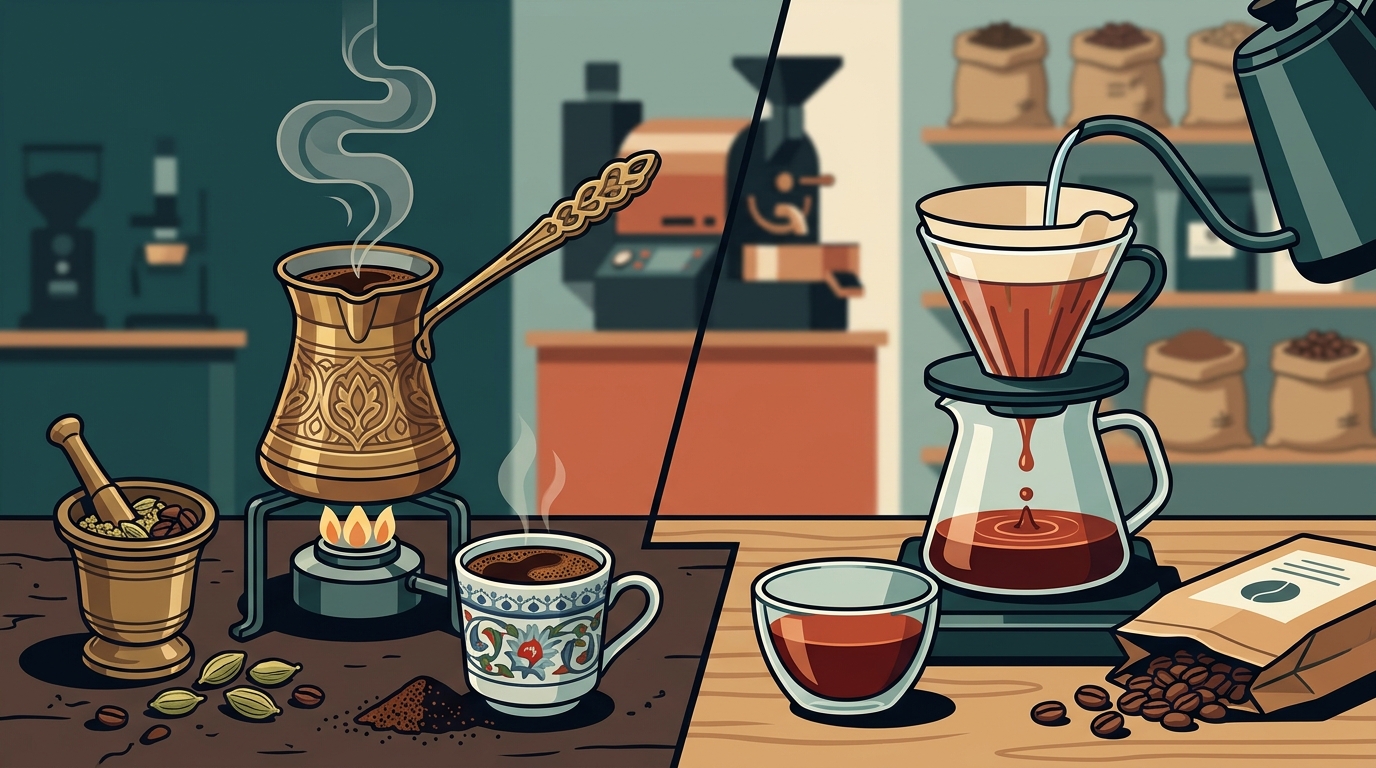
Brewing method is the most practical distinction between these coffee styles. Specialty coffee is generally brewed using filtration methods, such as pour-over, French press, or espresso, which separate the liquid from the grounds. Turkish coffee, however, is unfiltered. The grounds are boiled directly in the pot, and the entire mixture is poured into the cup, allowing the sediment to settle at the bottom.
This method requires a specific grind size, often described as finer than flour, which is not suitable for standard drip machines or espresso makers. At Harlo Coffee Roasters, we offer our Mediterranean Coffee in a fine grind specifically for this purpose. The brewing process is slower and more involved, often involving a traditional pot called a cezve or ibrik. This ritualistic approach contrasts sharply with the convenience of a modern automatic drip machine, appealing to those who view coffee as a meditative morning practice rather than a quick caffeine fix.
Cultural Context and Serving Traditions
The cultural context of Turkish coffee is deeply rooted in hospitality and social connection. In many Mediterranean and Middle Eastern traditions, serving this coffee is a sign of respect and welcome. It is often served with a small piece of Turkish delight or a date, which complements the intense flavor of the coffee. This social aspect is a significant differentiator from the individualistic nature of modern specialty coffee consumption, which is often focused on the individual's sensory experience.
Harlo Coffee Roasters honors this tradition by offering a product that connects to these ancient brewing practices. The addition of cardamom is a nod to the historical use of spices in coffee preparation, a practice that dates back centuries. For consumers, this means that drinking this coffee is not just about taste, but about participating in a cultural heritage. It offers a sense of connection to a broader global coffee culture that extends beyond the modern specialty coffee movement.
Comparing Harlo's Offerings
Within the Harlo Coffee Roasters catalog, the Mediterranean Coffee with Cardamom stands out from our other single origin and blend options. Our single origin coffees, such as the Ethiopian or Colombian varieties, are designed to showcase the specific characteristics of their growing regions. These coffees are typically washed and medium roasted to preserve their natural acidity and sweetness. The Mediterranean Coffee, on the other hand, is a blend crafted for a specific brewing style and flavor profile.
The table below summarizes the key differences between these options, helping you choose the right coffee for your preferences.
| Feature | Mediterranean Coffee with Cardamom | Single Origin Specialty Coffee |
|---|---|---|
| Grind Size | Extra Fine (Powder) | Medium to Coarse (Variable) |
| Brewing Method | Boiled/Unfiltered | Filtered/Espresso |
| Flavor Focus | Spice, Body, Warmth | Fruit, Acidity, Clarity |
| Best For | Traditional Rituals | Modern Sensory Exploration |
Key Takeaways
- Organic Turkish coffee with cardamom offers a spiced, heavy-bodied experience that contrasts with the bright, clear flavors of modern specialty coffee.
- The brewing method is unfiltered and requires an extra-fine grind, making it incompatible with standard drip or espresso equipment.
- This coffee style is deeply tied to cultural traditions of hospitality and slow, ritualistic consumption.
- Harlo Coffee Roasters provides this option for those seeking a connection to traditional Mediterranean and Middle Eastern coffee practices.
- The addition of cardamom shifts the flavor profile away from the bean's terroir and toward a warm, aromatic spice.
- Choosing this coffee is a choice for a different kind of coffee experience, focused on ritual and cultural heritage rather than just taste.
Frequently Asked Questions
Can I brew Turkish coffee in a standard espresso machine?
No, the grind size for Turkish coffee is much finer than what is required for espresso. Using it in an espresso machine will clog the filter basket and can damage the machine. It is designed to be boiled in a pot.
Is the cardamom added before or after roasting?
At Harlo Coffee Roasters, the cardamom is typically blended with the roasted coffee to ensure the aroma is preserved and evenly distributed. This allows the spice to infuse the coffee during the brewing process.
What is the best way to serve this coffee?
It is traditionally served in small cups, often with a piece of Turkish delight or a date on the side. The coffee is poured slowly, allowing the grounds to settle at the bottom of the cup.
Does this coffee contain caffeine?
Yes, like all coffee, it contains caffeine. The amount of caffeine per cup is similar to other coffee styles, though the unfiltered nature of the brew can make the taste feel more intense.
Can I use this coffee for cold brew?
It is not recommended for cold brew. The extra-fine grind will result in a muddy, over-extracted cup that is difficult to filter. It is best enjoyed hot, as it is traditionally prepared.